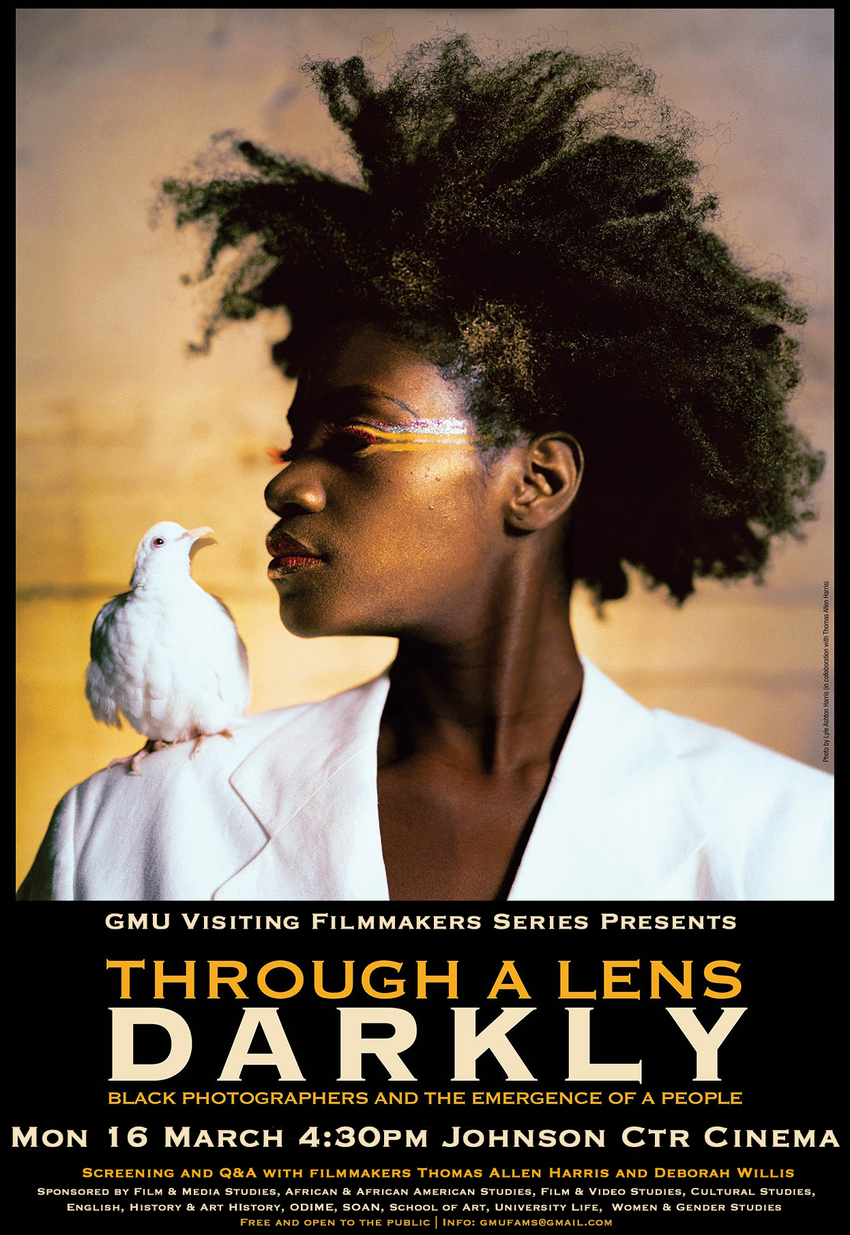
 George Mason University’s Film and Media Studies department hosted a screening of Chimpanzee Productions’ 2014 documentary “Through a Lens Darkly: Black Photographers and the Emergence of a People.”
The event, which included a discussion with director Thomas Harris and producer Deborah Willis, was part of the Visiting Filmmakers Series. Since 2007, the department of Film and Media Studies, under the direction of Professor Cynthia Fuchs, has invited numerous filmmakers to Mason to showcase and discuss their work.
“Through a Lens Darkly” explores the role of the photographic image in shaping African American identity. Narrated primarily by historians and professional photographers, the film recounts the history of African Americans as both photographers and photographic subjects from the time of slavery to the present.
It examines both how visual media has misrepresented African Americans over time and how black photographers have utilized photography to reclaim and redefine themselves and their communities.
“The film presents a way African Americans see themselves,” Mika’il Petin, associate director of African and African American Studies, said. “It is a counter to how each of us is socialized to control our bodies and to allow others to police us.”
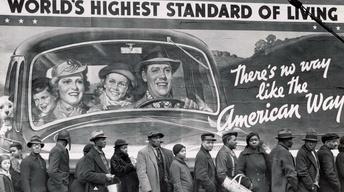
Since premiering at the Sundance Film Festival in January 2014, “Through a Lens Darkly” has received a number of awards including the Africa Movie Academy Award for Best Diaspora Documentary in 2014 and the NAACP Image Award for Outstanding Documentary in 2015.
“I like the film because I like that it’s flipping the narrative,” Caroline West, doctoral candidate in the department of Cultural Studies, said. “It’s a really interesting way to think about how images create meanings based on who is the photographer and who is in the images.”
The event was sponsored by Film & Media Studies, African & African American Studies, Film & Video Studies, Cultural Studies, English, History & Art History, the Office of Diversity, Inclusion and Multicultural Education, the School of Art, Sociology and Anthropology, University Life, and Women & Gender Studies.
The documentary is now available on DVD and iTunes.